Can Insurance Make You Use Its Preferred Body Shop?
An insurer may recommend a network shop, but repair-shop choice depends on your state, policy, and claim type. Learn what to ask before authorizing repairs.

Usually, your insurer can recommend a preferred repair shop, but whether it can require a particular shop depends on your state, the policy, and whether you are using your own collision coverage or making a claim against another driver’s insurer. Before authorizing repairs, ask what your choices are, how estimates will be coordinated, and who will address a disagreement over the work or price. A network shop may offer convenient claims handling, but compare that convenience with a shop you already trust.
This is general educational information, not legal advice. Claim Value Now is not a law firm. State rules and policy language differ, so check your policy and your state insurance department’s guidance.
What “preferred shop” means
An insurer’s preferred or direct-repair network is a group of shops that has an arrangement with the insurer. The shop may be able to send estimates and updates directly to the adjuster, which can make approvals easier. The insurer may also stand behind certain network repairs under its program terms. Ask for those terms in writing; details and duration vary.
A recommendation is not always a requirement. Oregon’s Division of Financial Regulation says an insurer cannot require a particular repair shop, while California consumer guidance explains standards that apply when a consumer chooses a shop. These are state examples, not a rule for every claim in the country. Oregon repair-shop guidance · California accident and insurance guidance.
Ask these questions before choosing a shop
- Is the insurer recommending a network shop, or saying my policy or state law requires one? Please point me to the policy provision or rule.
- Can I get my own written estimate before authorizing work?
- Will the shop send a repair plan to the adjuster, and who approves changes discovered during repairs?
- What happens if the shop’s estimate is higher than the insurer’s estimate?
- Who handles a workmanship concern, and what written warranty applies?
- Will I pay any amount above what the insurer approves, and can that be reviewed before repairs begin?
Write down the claim number, the person you spoke with, and the answers. If the other driver’s insurer is handling your property-damage claim, ask whether it has accepted responsibility and what it needs to inspect the vehicle. A liability insurer may investigate fault before agreeing to pay; using your own collision coverage may follow a different process and deductible.
Compare convenience with control
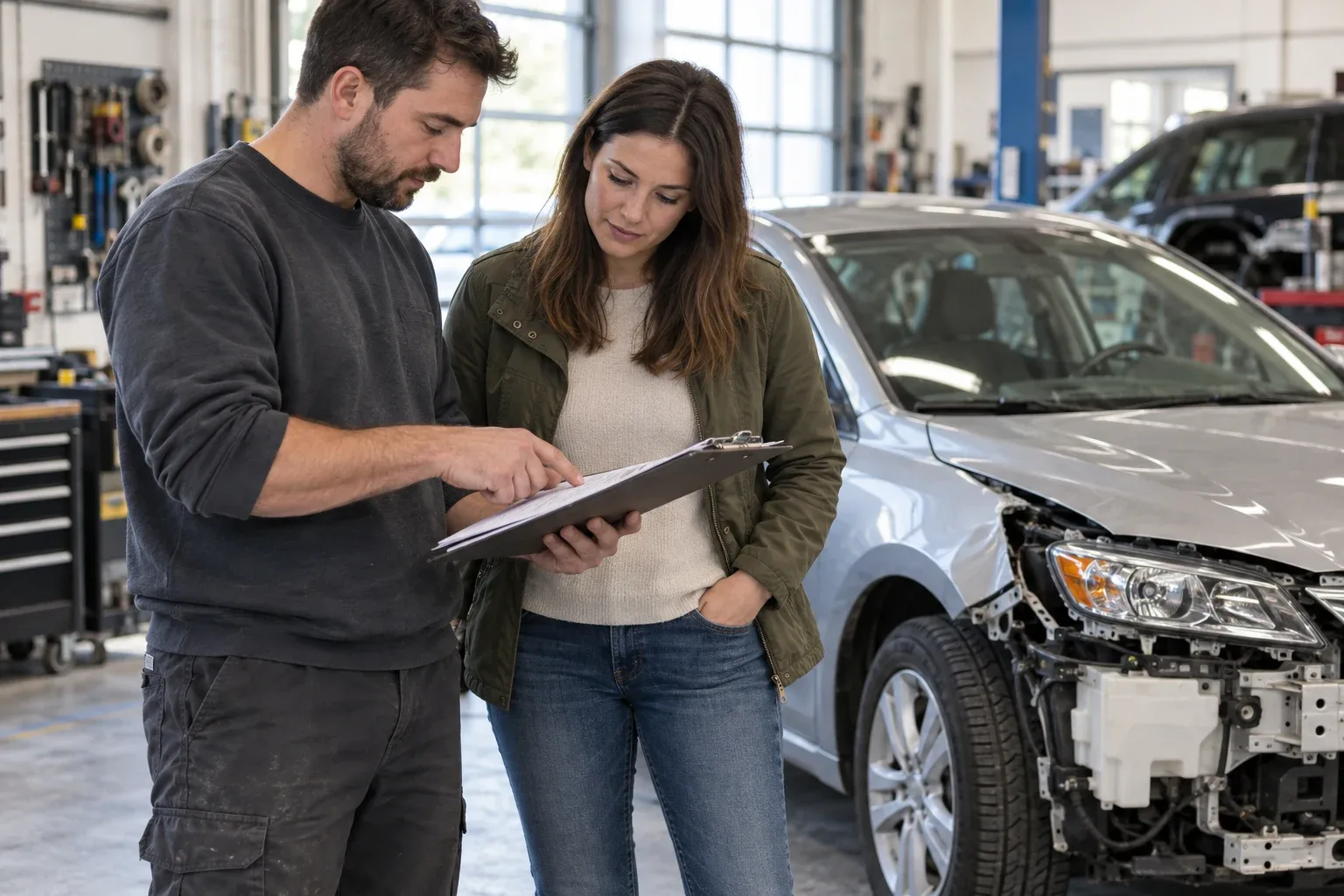
A network shop may already know the insurer’s estimate and photo process. An independent shop may be closer to home, familiar with your vehicle, or simply your preferred choice. Compare the actual options: distance, repair timeline, parts and repair procedures listed in the estimate, communication, warranty terms, and whether you will need to coordinate with the adjuster yourself.
Do not assume selecting a shop means the insurer will pay any price the shop quotes. The insurer may review whether proposed work relates to the accident, whether the estimate follows applicable rules and policy terms, and whether additional damage needs documentation. Ask the shop and adjuster to resolve differences before authorizing work that could leave you responsible for an unapproved balance.
What to do if the shop and insurer disagree
- Ask the shop for an itemized estimate and a short explanation of disputed labor, parts, or procedures.
- Send that information to the adjuster through the insurer’s documented channel and request a written response.
- Ask whether a reinspection or discussion between the shop and adjuster is available.
- Keep copies of estimates, photos, approvals, invoices, and messages. Do not rely on a verbal promise for a disputed amount.
- If you cannot resolve the issue, check your state insurance department’s complaint or consumer-assistance process. A regulator can explain its role but may not decide every contract or factual dispute.
Texas Department of Insurance consumer guidance describes communicating with the adjuster when damage is worse than first estimated and how claims can differ by coverage. Read your state’s rules and policy for your own situation: Texas auto insurance guide.
Before you authorize repairs
Make sure you know who is paying, what amount has been approved, whether the vehicle is safe to drive, and what you would owe if the final invoice differs. If the vehicle may be unsafe, ask the repair professional about safe transportation rather than driving it to compare shops. Save the final estimate and paid invoice with your claim documents.
If you are also evaluating the injury portion of a crash claim, the Claim Value Now calculator can provide an educational starting point. It does not determine fault, repair coverage, or a guaranteed outcome.
Claim Value is a marketing and intake service. Articles are for general educational purposes, do not provide legal or medical advice, and do not predict a case outcome. Laws and circumstances vary.
Wondering where your claim starts?
Our free calculator helps you explore an educational range based on your answers.
Start my estimate