Texas Accident Towing and Storage Fees: Who Pays and What to Do
A Texas crash can leave you with towing and storage charges before fault is settled. Learn how to confirm a tow, choose a destination, document fees, and ask whether your policy or another driver’s insurer may cover reasonable costs.
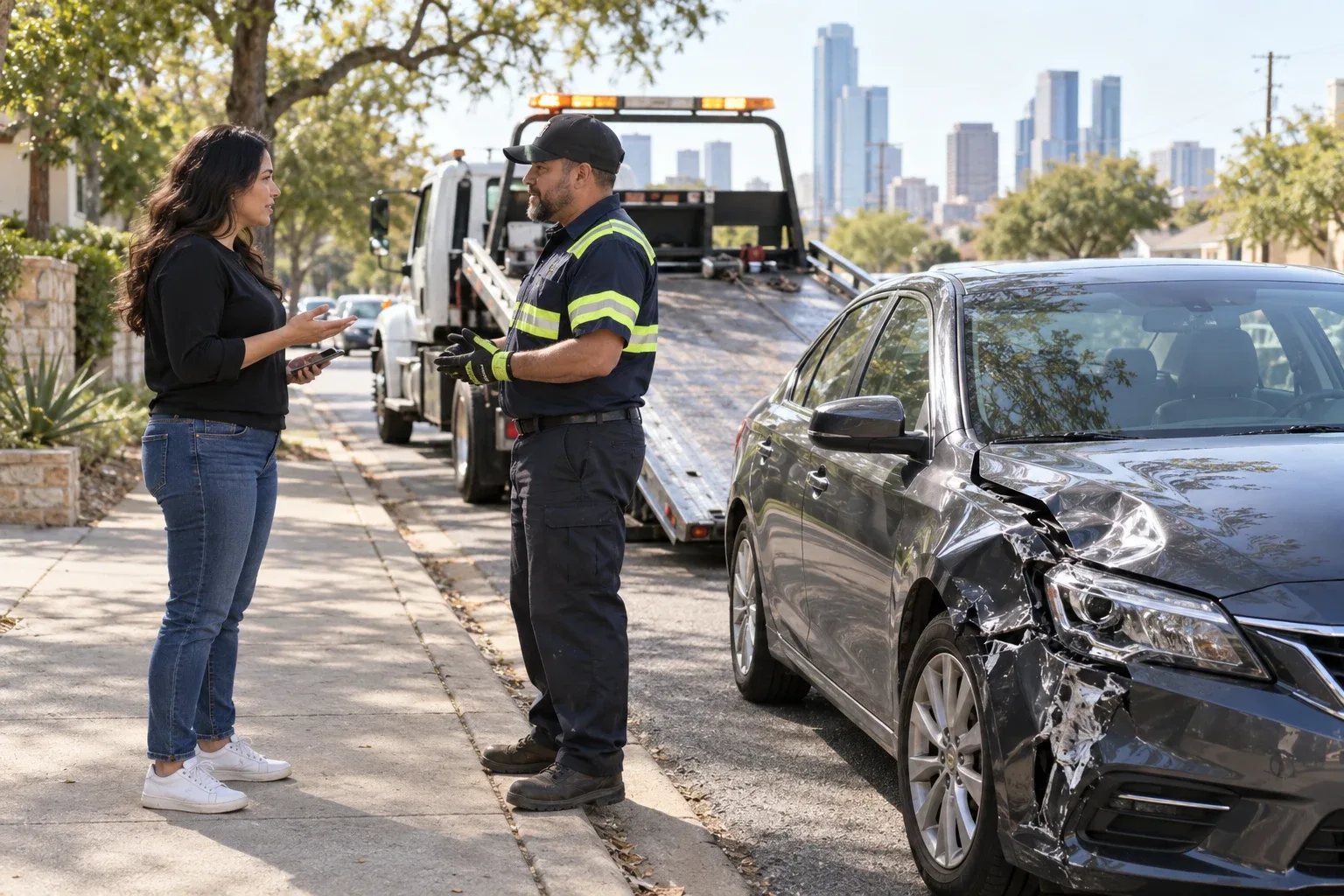
After a Texas crash, take a moment before agreeing to a tow: confirm who called the truck, choose the destination yourself when you can, and get the vehicle’s location and a written receipt. An unsolicited tow to an unfamiliar repair shop can lead to unexpected storage and other charges. Who ultimately pays depends on the coverage, responsibility for the crash, reasonableness of the charges, and claim decision. Save the paperwork and contact the insurer promptly.
How a tow scam can turn into a storage bill
The Texas Department of Insurance warns about tow operators who arrive without being called by the driver or police, steer a damaged vehicle to a particular shop, and later leave the owner facing substantial storage or other fees. A tow truck’s arrival at a crash scene does not automatically mean it was dispatched by police or your insurer. Ask who requested the tow and where the car is going before signing.
If the vehicle cannot be driven, the Texas Department of Insurance says you can direct the tow to a storage lot or repair shop you choose. If you do not yet know which shop you want, ask whether a temporary storage location is available and confirm the lot’s address and daily charges. Do not leave the destination vague.
Who may pay towing and storage after a Texas accident?
There is no single answer for every crash. TDI says a policy with collision and comprehensive coverage may pay reasonable towing and storage fees, while a liability-only policy may leave the vehicle owner responsible for those charges. If another driver caused the crash, that driver’s insurer might pay reasonable fees, but the claim and responsibility may still be under review. Your declarations page and policy wording determine what your own coverage includes; roadside assistance or towing-and-labor coverage may have separate limits and terms.
Ask your insurer these questions as soon as practical:
- Does my policy cover this tow, storage, or roadside service, and what limits apply?
- Has the vehicle been moved to an insurer-approved inspection location, and does the insurer need to inspect it before repairs or disposal?
- Who is reviewing the charges, what receipts or authorizations are needed, and should the vehicle be moved to avoid additional storage charges?
- If the other driver’s insurer is being asked to pay, what happens if liability or the amount remains disputed?
Steps to protect yourself at the scene and afterward
- Use a tow only when needed. If it is safe and lawful to drive the vehicle, you may not need a tow. Never stand in traffic or delay emergency help to manage paperwork.
- Verify the tow operator. Ask whether police or you requested the truck. If not, contact your insurer or local law enforcement before authorizing a destination when circumstances allow.
- Choose and confirm the destination. State the exact shop or lot name and address. Read any authorization before signing; ask what services it authorizes and whether it assigns payment or repair rights.
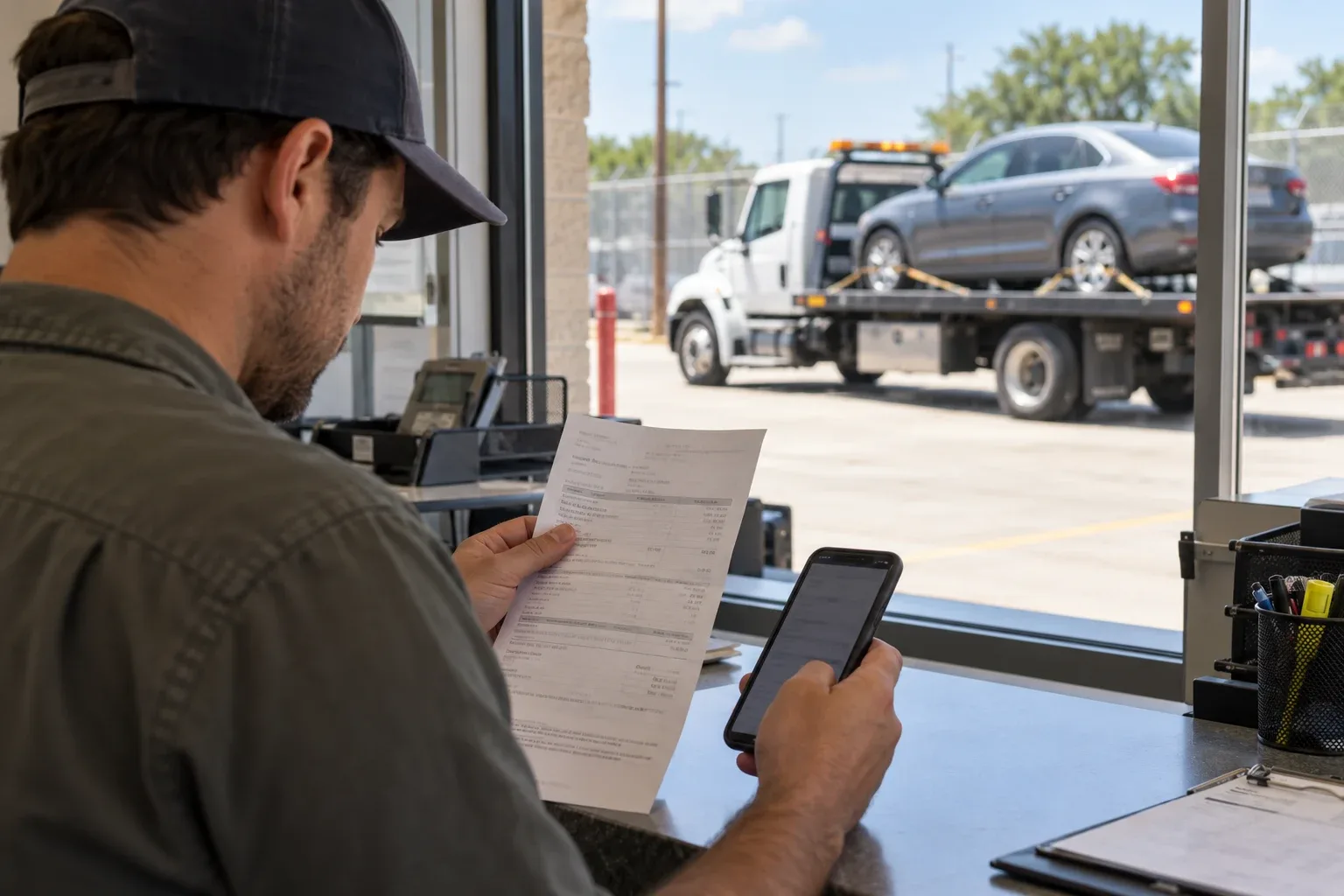
- Record the charges and vehicle condition. Request an itemized receipt with the tow date, pickup and delivery locations, base charge, mileage, storage rate, and any access or release fees. Photograph the vehicle and paperwork if safe.
- Tell the insurer where the car is. Send the receipt and location promptly. Ask what inspection or claim steps are needed and whether the insurer recommends moving the car. Storage may keep accruing under the facility’s terms while responsibility is unresolved.
If you already signed or the vehicle is in storage
Get a copy of every tow, storage, repair, or direction-to-pay document you signed. Contact the storage facility to confirm the current balance, daily rate, release process, and accepted payment methods. Notify your insurer in writing, ask about coverage and the next inspection step, and keep a dated log of calls and messages. Do not assume the insurer has accepted a bill simply because the vehicle was towed.
For a towing-company or vehicle-storage-facility concern in Texas, the Texas Department of Licensing and Regulation provides consumer information and complaint resources. For an insurance claim concern, contact the adjuster or supervisor first; the Texas Department of Insurance’s crash guide explains claim steps and how vehicle repair estimates may be handled.
Our guide to rental cars after a Texas accident covers the related transportation question. Claim Value Now is not a law firm. This article is general education, not a coverage decision or legal advice. Review your policy and ask the insurer how it applies to your facts. You can use the Claim Value Now calculator for an educational starting point on injury-claim estimates; it does not estimate towing bills or guarantee a recovery.
Claim Value is a marketing and intake service. Articles are for general educational purposes, do not provide legal or medical advice, and do not predict a case outcome. Laws and circumstances vary.
Wondering where your claim starts?
Our free calculator helps you explore an educational range based on your answers.
Start my estimate