How to File a Diminished Value Claim After a Car Accident
A repaired car can still have a lower resale value because of its accident history. Learn what records to gather and how to ask an insurer to review a possible value claim.

Diminished value is a possible loss in a vehicle’s market value after a crash, even when repairs are complete. Whether you can recover it depends on the claim route, policy language, state law, fault and evidence. Start by documenting repairs and asking the insurer in writing what process applies. A repair invoice alone does not establish the amount of any resale-value loss.
This is a property damage question. It is separate from bodily injury, medical expenses or pain and suffering. Claim Value Now is not a law firm; this guide is general education, not a decision about your rights.
What does diminished value mean?
It is a claimed difference between what a vehicle would reasonably have been worth without the accident and what it may be worth after repair with the accident history. Buyers may consider prior damage, repair quality, mileage, age, trim and structural work. This does not mean every repaired car automatically has a recoverable loss.
Keep it distinct from repair cost: the shop bill measures work performed, while diminished value concerns market value. The Washington Office of the Insurance Commissioner describes the value difference and notes that some policies do not cover it. That is Washington guidance; coverage and claim rules vary by state and contract.
Which insurer should you contact?
If another driver allegedly caused the crash, you can ask that driver’s liability insurer to consider post-repair value. The carrier may investigate fault, coverage and evidence. If you use your own collision policy, check the contract and ask whether it covers diminished value; a policy that pays for repairs may treat value loss differently.
Ask the representative to confirm in writing which coverage is being considered, what documents are needed, whether repairs should be complete first, any deadlines, and how to submit evidence. Do not sign a property-damage release without understanding what it resolves. Ask for time to review unclear terms.
Build evidence about your vehicle and repairs
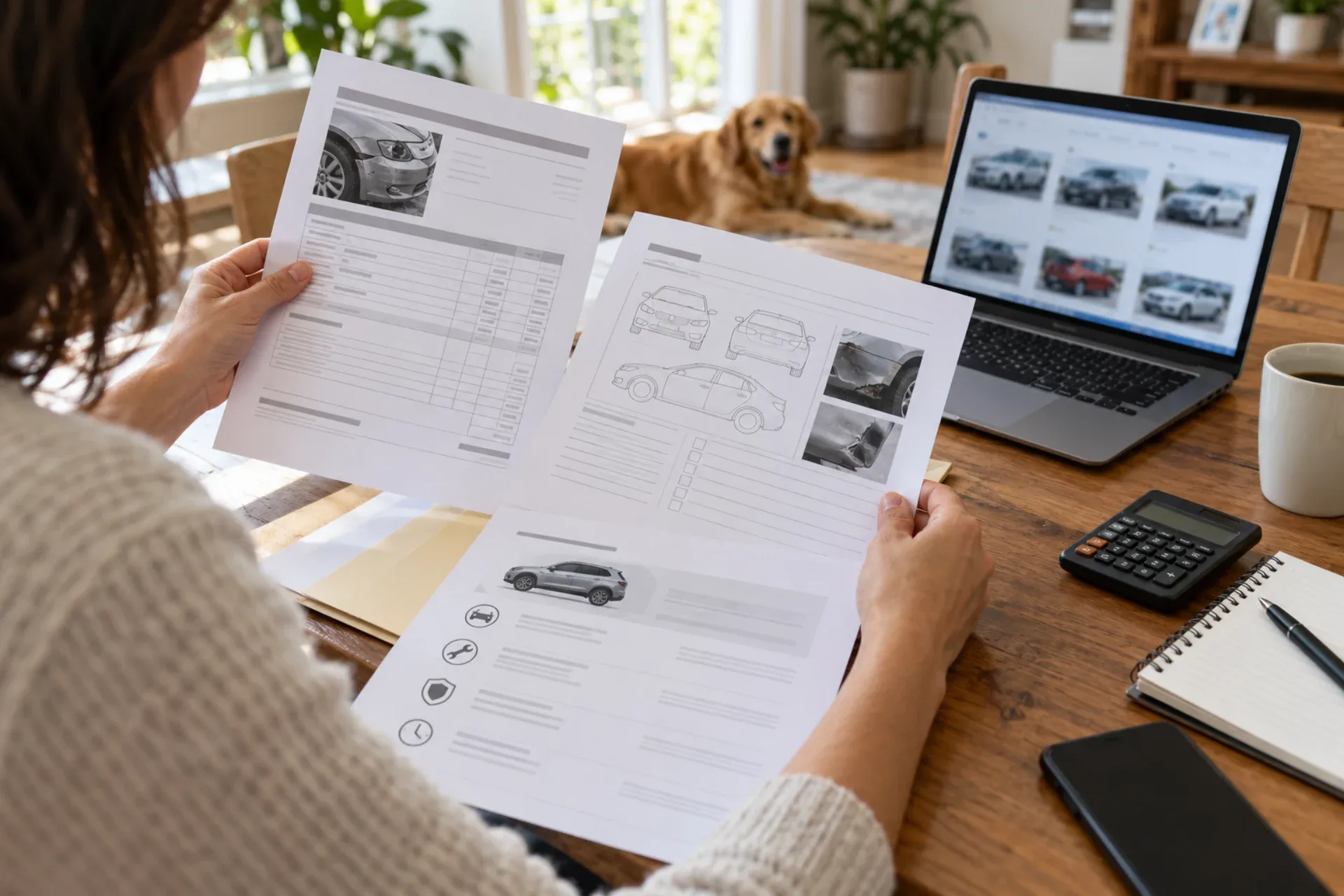
Organize a factual packet instead of relying on a generic percentage or repair total. Useful records can include:
Year, make, model, trim, mileage and pre-crash condition, plus records of earlier damage or repairs.
Safe photographs, the initial estimate, supplements, final itemized invoice and repair-shop notes.
Records of parts or structural work, plus any post-repair inspection or documented concern.
Vehicle-history information and comparable vehicles with similar year, trim, mileage, condition and location. Save each source and date.
A written appraisal, trade-in assessment or dealer response explaining the vehicle and method, if the cost is worthwhile.
Asking prices are not completed sale prices. Explain why comparisons are similar and adjust for meaningful differences. Label estimates, offers and actual transactions clearly.
Send a clear written request
Identify the accident and claim number, say you are asking the insurer to evaluate a possible diminished-value loss, summarize repairs, attach records, and explain how your comparisons or appraisal support the amount. Keep copies and note when and how you submitted them.
If the insurer disagrees, request its written explanation and valuation method or comparable vehicles. Check whether it considered mileage, prior damage, repair type and local market. Respond with specific corrections and evidence. Do not claim one formula is required nationwide; valuation methods and legal rules differ.
Check deadlines and keep it separate from injury estimates
Property claims can have deadlines under state law, a policy or a settlement document. Check your state insurance department’s consumer resources and ask the insurer promptly. If a deadline or release is unclear, consider speaking with a licensed attorney in your state.
A vehicle-value claim is separate from an injury estimate. The Claim Value Now calculator explainer addresses an educational personal-injury estimate. You can use the calculator to organize injury-related questions, while pursuing vehicle damage through the applicable property claim process.
Sources checked October 19, 2026. General educational information, not legal advice or a promise of payment. State laws, policy terms and individual facts matter.
Claim Value is a marketing and intake service. Articles are for general educational purposes, do not provide legal or medical advice, and do not predict a case outcome. Laws and circumstances vary.
Wondering where your claim starts?
Our free calculator helps you explore an educational range based on your answers.
Start my estimate